



In oncology clinical trials, a treatment’s fate often hinges on a single question: did the tumor shrink? Standardized frameworks like RECIST and RANO were built to answer that question consistently. Blinded Independent Central Review (BICR) adds a further safeguard, with two independent radiologists reading the same images blind to treatment assignment, and a third adjudicator stepping in when they disagree. Yet even within this carefully designed system, reader variability persists, showing up across response criteria, cancer types, and imaging modalities, and quietly shaping trial outcomes. This webinar digs into why that variability exists, what’s being done about it, and where the field may be headed next.
3 Key Questions Explored:
- Tackling variability head-on: How is MERIT approaching reader variability in practice? What mitigation strategies are actually being implemented today?
- The AI question: Can artificial intelligence read oncology images in this context? And more importantly, can it help readers reach higher agreement, not just replace them?
- A persistent problem, or a solvable one? Is reader variability an unavoidable byproduct of BICR’s structure and the inherent ambiguity of disease presentation, or could emerging technology and smarter mitigation strategies eventually close the gap?
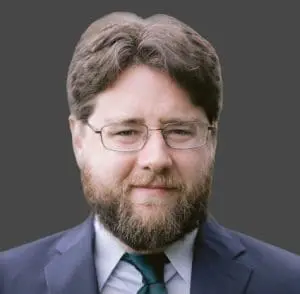
Will Beute, MSOncology Proposal Development Specialist
Will Beute holds a BA in Biology from Cornell and an MS in Biomedical Science from Rutgers, with 3+ years of graduate research on hematologic malignancies at Rutgers NJMS. His thesis examined Vitamin D as a differentiating agent combined with oncogene inhibitors to enhance leukemic cell death in AML and MDS. He now supports oncology clinical studies through scientific and market research, and by drafting proposals, white papers, and clinical trial imaging and endpoint protocols.

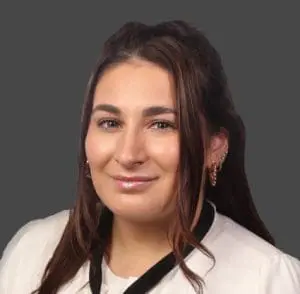
Brea AgostinoOncology Business Development Associate
Brea’s background is in marketing and business development, with roots in sales. She supports oncology clinical research by identifying sponsor needs, building relationships, and connecting them with the right solutions to support their clinical trials. Her work bridges business development with the practical realities of clinical trial execution, helping ensure sponsors have the right partner in place from the start.